I used to think that “quitting your phone” was just a matter of self-discipline. Until I realized I was unconsciously unlocking my phone an absurd number of times each day.
Sometimes I just wanted to reply to a message, but ended up opening a short video; I was supposed to be looking up information, but ten minutes later I was scrolling through social media. Even more ridiculous, I often unlocked my phone without any purpose and mechanically swiped down.
I began to realize that the problem wasn’t “spending too much time on my phone,” but that my attention system was being retrained. So I started seriously researching various “phone blocking tools.”
From the earliest software restrictions to the increasingly popular “physical blocking devices,” I tried quite a few products. What really troubled me was: there are so many solutions on the market, but each claims to be effective. Finally, I decided to personally try out the three most popular ones: Brick, Opal, and Unpluq.
I wanted to know, what are the differences between them? And which one is the most worthwhile to buy?
1.Why are more and more people using “physical screen timers”?
Previously, most people’s solutions to phone addiction were software-based. These included system screen time, focus apps, the Pomodoro Technique, and website blocking tools. I later discovered that these tools all shared a common problem: they assumed you were “rational.”
But the reality is that most people aren’t rational when using their phones.
When short videos have already captured your attention, a “You’ve exceeded your screen time limit for today” pop-up is almost meaningless. Because you can simply click “Ignore Limits,” and all the rules will become invalid. Therefore, I increasingly understand why “physical isolation” has become a trend in the last two years.
Because the real problem isn’t “Do you know when to stop?”, but whether you can be forced to stop the moment the impulse occurs. Brick, Opal, and Unpluq all address this problem, just in completely different ways.
2.I tried Opal first because it had the lowest barrier to entry
Opal is probably the easiest tool to use right now. It’s essentially a software solution, but it’s more granular than the system’s built-in screen time.
It allows you to set work modes and deep focus modes, and can even block short videos, social media, and web content. From its interface to its interaction, it’s a very “modern” product.
At first, I found it quite effective. Especially during work, suddenly being unable to access social media gave me a feeling of “finally some peace and quiet.”
But problems quickly arose. Because it’s still software after all.
A few times when I was feeling irritable, I would temporarily disable the restrictions; sometimes, just to “check messages,” I would even exit focus mode. Later, I realized that Opal’s biggest problem wasn’t a lack of features, but that it still relied on the premise that “the user would actively cooperate.”
In short, it’s more suitable for mildly distracted people. If you’re only occasionally prone to slacking off, it works well; but if you’re already in that state of “uncontrollably scrolling through your phone,” it won’t really stop you.
3.Then I tried Unpluq, which started to approach “physical constraints”
Compared to Opal, Unpluq is significantly more “hardcore.” It incorporates NFC physical devices, meaning you need to use physical hardware to unlock certain restrictions.
I was quite pleasantly surprised when I first used it. It finally went beyond simply “reminding you not to use your phone,” and genuinely began to intervene in your behavior.
Moreover, Unpluq is highly flexible. You can set different unlocking methods and freely decide which apps are restricted and which scenarios allow temporary unlocking. For many, this feeling of “control with freedom” is very comfortable.
However, after using it for a while, I discovered a problem. Although it incorporates hardware, the overall logic is still heavily reliant on “flexibility.” And this flexibility can sometimes become a loophole. Because in an impulsive state, people instinctively seek the easiest way to circumvent restrictions.
Several times, I relaxed the restrictions step by step, thinking I was “just going to check temporarily,” only to return to the cycle of using my phone. So I later realized that for truly heavy phone addicts, “having a way out” isn’t necessarily a good thing.
4.Brick was the last thing I tried, and it surprised me the most
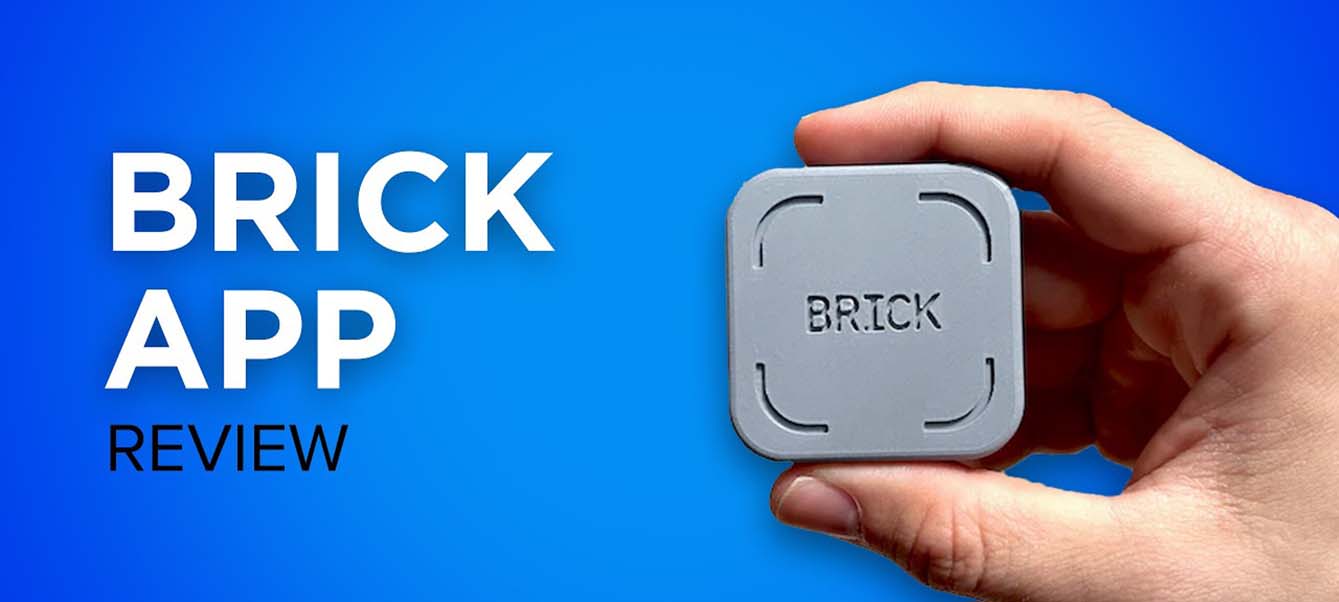
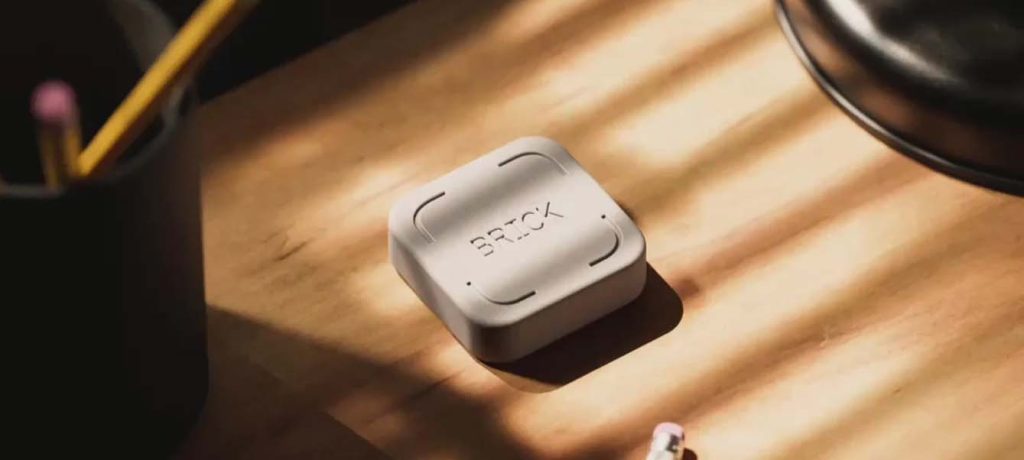
My last try was Brick, and I didn’t expect it to give me such a completely new experience. Initially, my expectations for it weren’t high—it’s small, minimalist in design, with no complicated interface or flashy lights; it even looks like an ordinary gadget rather than a tech product. But after actually using it, I realized that this simplicity is precisely its strength.
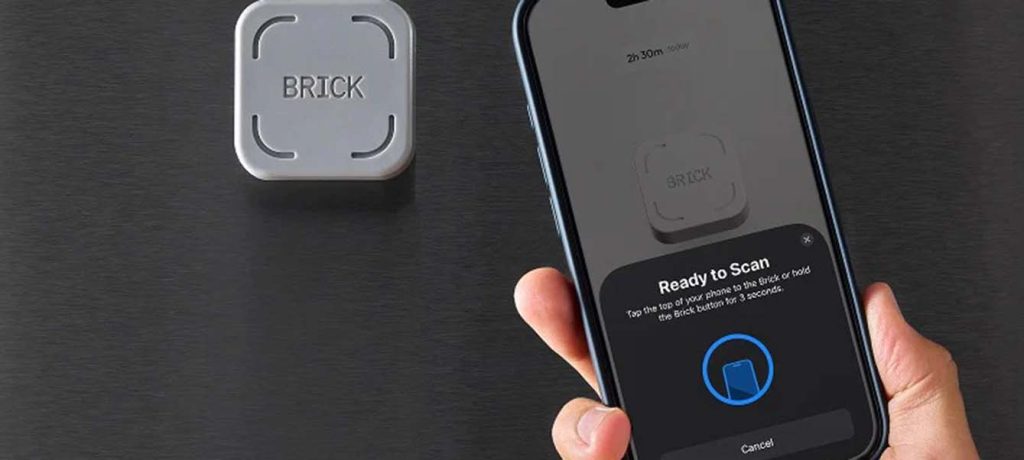
Brick‘s logic is very straightforward: to unlock your phone, you must first touch the physical device. It sounds simple, but when you actually hold it in your hand and make that gesture, you’ll find that those few seconds can interrupt your initial impulse.
Before, I used to use my phone completely unconsciously: pick up the phone → unlock → open the app → swipe down repeatedly. The whole process didn’t even give me time to think.
But with Brick, every time I use my phone, I must first pick it up and touch it to unlock it. In that instant, I suddenly stop—those few seconds, though short, are enough for me to realize: Do I really need to use it now? One evening, I subconsciously wanted to open a short video app, but as I reached for Brick, it suddenly dawned on me: “I don’t actually want to watch it.”
At that moment, I truly understood that most of my previous screen-scrolling behavior was habit, not need. Brick‘s value lies in its ability to force a physical pause between habit and impulse, giving me a renewed opportunity to choose whether to act, instead of being led by my phone.
5.The biggest difference between Brick and two other products is the “sense of resistance”
After using three apps, I increasingly realized that what truly determines a tool’s usefulness isn’t the number of features, but its ability to create “resistance.”
Because most mobile phone actions are too smooth these days. The reason short videos are so addictive is essentially because they make the “stimulation” experience too instantaneous. You don’t need to wait, you don’t need to think, you just swipe.
What Brick does is reintroduce “friction” into this process. Each unlock requires you to complete a real-world action. This transforms the entire behavior from an “automatic reaction” back into an “active choice.”
In contrast, Opal is more like a gentle software assistant. It reminds you, limits you, and pops up focus screens, but it still essentially relies on your self-control. If you really want to bypass it, it’s not difficult.
Unpluq has gone a step further than Opal by incorporating NFC and physical elements, which does indeed increase the cost of unlocking.
However, it’s still relatively “flexible.” This flexibility is comfortable for many mildly distracted people, but for heavy phone addicts, it sometimes leaves too many escape routes.
Brick‘s logic is very clear: it doesn’t want to give you an “easy way around.” In some ways, it’s even a bit “hardcore.” But it’s precisely this hardcore nature that makes it truly effective.
After using it for a few weeks, I began to feel the most significant change in “complete attention” again. It wasn’t actually a reduction in phone usage time, but rather a return to the feeling of “continuous focus.”
Before, when I was working, I would often touch my phone every few minutes. Even without messages, I would habitually turn on the screen. This fragmented switching is actually very taxing on the brain.
But what Brick ultimately changed wasn’t just my phone-using behavior, but my entire attention rhythm. It forced me to pause before picking up my phone every time.
This pause gradually made me realize: “Do I really want to use my phone, or is it just a conditioned reflex?”
This difference seems small, but in the long run, its impact on attention is particularly significant.
6.From software to hardware, I finally understood the meaning of “physical isolation”
I used to think that focus problems were a matter of willpower.
Later, I realized that the intensity of algorithms and short video design is far more terrifying than human self-control.
Therefore, the truly effective method is often not to continue forcing oneself to be more disciplined, but to change the environment in which the behavior occurs.
And Brick, Opal, and Unpluq are essentially doing this.
For me, however, Brick was the most thorough and effective choice.
Because it didn’t just remind me to use my phone less, it genuinely prevented me from “unconsciously starting to use my phone.”